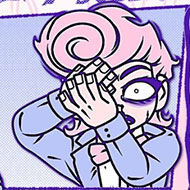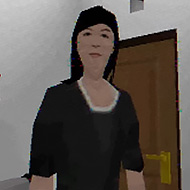
You put your headphones on because the game asks you to, not because you think you’ll need them yet — and then Shutter Story spends its next fifteen to thirty minutes proving exactly why that instruction mattered more than it seemed to at the start.
| Genre | Analog Horror |
| Play Time | 15–30 minutes |
| Recommended Setup | Headphones |
| Difficulty | Adjustable |
A Short Game Built Entirely on Sound
Shutter Story belongs to the analog horror genre, and it leans on that label harder than most — audio design isn’t a supporting element here, it’s close to the whole mechanism the horror runs on. Players who skip the headphones recommendation and play through speakers consistently report a noticeably weaker experience, since a lot of the game’s tension is built on directional and layered sound cues that don’t translate the same way without them.
Sessions are intentionally short, running somewhere between fifteen and thirty minutes depending on difficulty settings, which keeps the whole experience tightly paced rather than stretched thin. Nothing about Shutter Story overstays its welcome, and that brevity is frequently cited as a strength rather than a limitation.
The Stimulation Bar: A Mechanic That Watches You Back
One specific system sets Shutter Story apart from a lot of the analog horror crowd it sits alongside — a stimulation bar tied to mouse-based interaction that essentially tracks how you’re engaging with the game in real time. It’s not a health bar in the traditional sense; it’s closer to a tension meter that responds to player behavior itself, which adds a layer of self-awareness to sessions that a purely scripted horror game wouldn’t have.
Figuring out exactly how your own actions feed into that system is part of the challenge, and it’s a detail that keeps coming up in player discussion as one of the more distinctive design choices in the game.
Playing Through Speakers, Rushing the Pace
New players often treat Shutter Story like a standard point-and-click horror short, moving the mouse constantly and clicking through prompts without paying attention to pacing. Because the stimulation bar responds to interaction patterns, that kind of rushed, constant input tends to work against you rather than helping you progress faster.
The other common mistake is playing on a harder difficulty setting first out of overconfidence from other short horror games. Given how much of Shutter Story’s identity is built on sound and pacing rather than pure challenge, starting on a gentler difficulty setting lets the atmosphere actually land before the mechanical pressure ramps up.
Comparisons the Community Keeps Making
Players frequently bring up the Mandela Catalogue and similar analogue horror media when discussing Shutter Story, less because the plots overlap directly and more because of a shared visual and tonal language — degraded footage aesthetics, uncanny pacing, the sense that something in the frame isn’t behaving the way it should. That comparison tends to set expectations accurately for anyone deciding whether the game’s specific flavor of horror is for them.
- Wear headphones — directional audio does a significant amount of the game’s work
- Start on an easier difficulty to let the pacing and atmosphere land first
- Move deliberately rather than constantly, since the stimulation bar tracks interaction patterns
- Expect a short, tightly paced session rather than an extended horror campaign
Does difficulty change what happens in Shutter Story, or just the challenge level?
Difficulty primarily affects how forgiving the stimulation bar and pacing are, making it a reasonable way to tune the intensity without changing the core fifteen-to-thirty-minute experience.
Is Shutter Story worth replaying once finished?
Given the short runtime and the sound-driven design, a lot of players do return for a second pass, often noticing audio cues and details on a subsequent playthrough that were easy to miss the first time through.
By the time Shutter Story’s short runtime runs out, what lingers isn’t a jump scare you can point to — it’s the sense that something in the audio was reacting to you the entire time, which is exactly the kind of unease analog horror is built to leave behind.